
How AZ Zeno implemented digital pathology without disrupting routine diagnostics
Enabling Digital Pathology and AI adoption in a resource-conscious hospital lab

“The solution fits our practice perfectly. It makes us future-proof without forcing major investments.”
About this interview
This case study is based on a recorded interview with Dr. Bart Lelie, discussing the lab’s digital pathology journey, AI validation experience, and future plans.
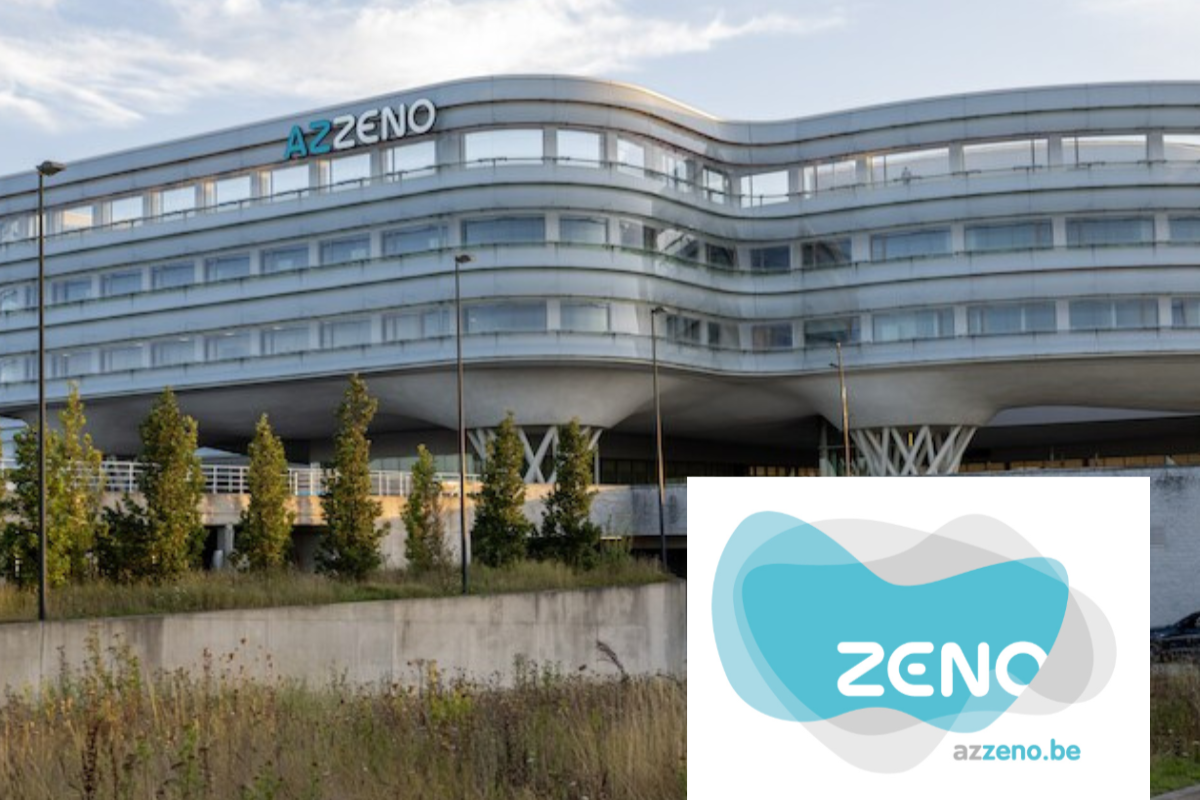
About AZ Zeno
AZ Zeno is a 330-bed hospital in Belgium, serving a regional patient population across multiple campuses. The pathology laboratory processes approximately 7,500 biopsies per year and handles the full spectrum of general pathology cases, including around 100 new breast cancer diagnoses annually.
The lab is led by Dr. Bart Lelie, Pathologist, Medical Head, and Laboratory Director. With a team of 1.5 FTE pathologists, the laboratory operates in a highly efficient diagnostic model.
Slides are embedded in the evening and reviewed the next morning. Reports are generated quickly and consistently. Routine workflow is already optimized.
For AZ Zeno, digital transformation was about adding what was missing and never about replacing what works.
The Context: Why full routine digitization was not the priority
Unlike large academic centers with centralized funding and high case volumes, smaller hospitals in decentralized healthcare systems operate under different constraints.
In AZ Zeno’s case:
Routine microscopy is fast and efficient
Full primary digital diagnostics would not increase speed
Large enterprise digital pathology platforms would be financially disproportionate
However, new needs were emerging:
Structured external case sharing
Long-term digital storage
AI validation for biomarker interpretation
Future-proofing the lab without over-investing
The question was not “Should we go fully digital?”
The question was:
“How can we strategically integrate digital pathology where it adds real value?”
The Strategy: A targeted digital layer
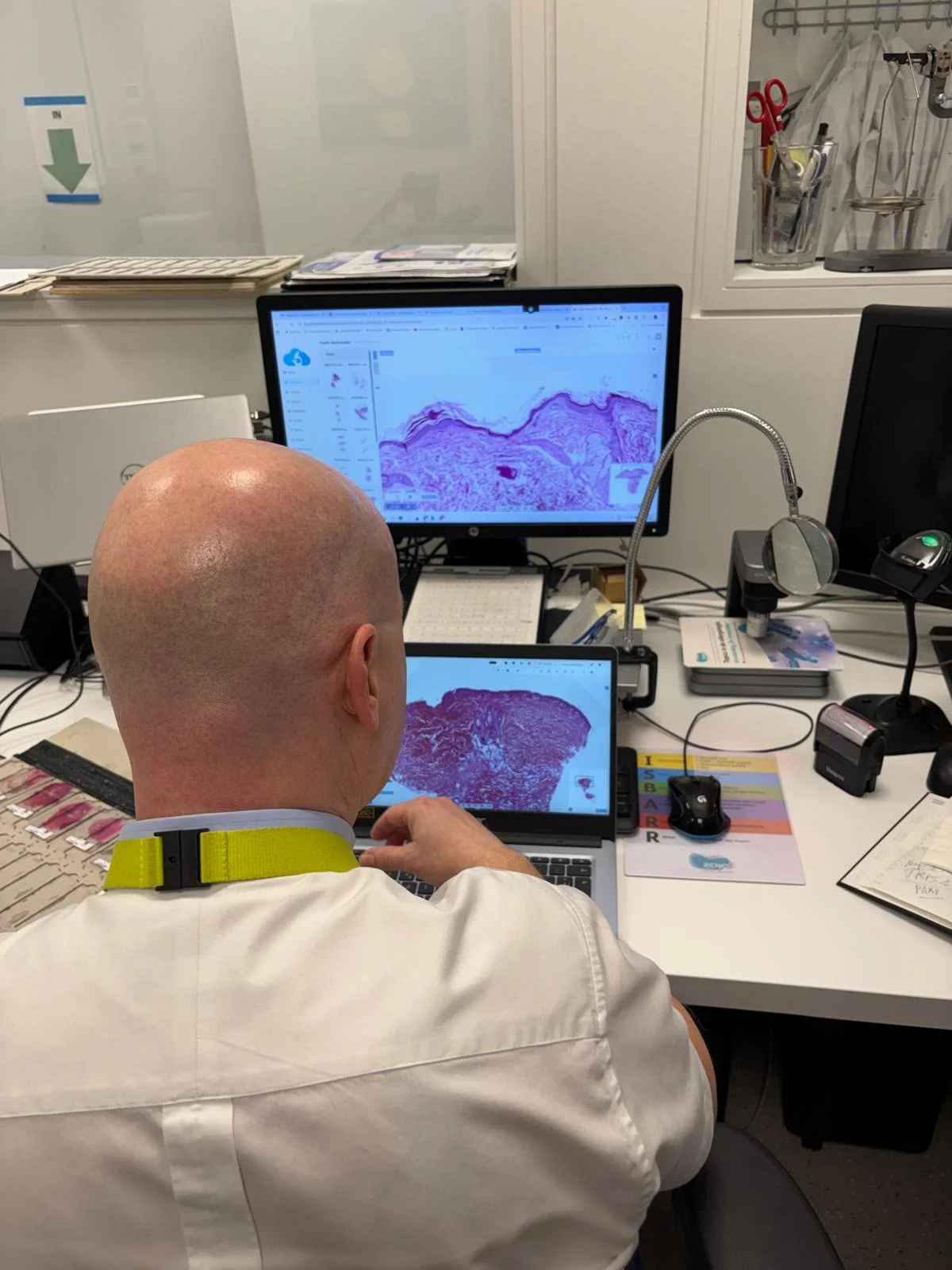
Instead of fully digitizing routine workflow, AZ Zeno implemented a targeted digital strategy using My Pathomation.
A compact scanner was introduced, and digital pathology was deployed selectively for:
Remote consultations
Centralized slide sharing
Measurement tools (e.g., melanoma margins and Breslow thickness)
AI validation (ER/PR, HER2, Ki67)
Exploration of in-house PD-L1 implementation
Digital pathology became a true enhancement layer.
This modular approach allowed the lab to introduce digital capabilities exactly where they delivered impact, while preserving the efficiency of traditional workflow.
Improving external collaboration
Before implementation, sharing cases required sending individual links per slide. This created inefficiencies and confusion.
With My Pathomation:
Slides are stored in a structured viewer environment
External collaborators access cases through a single consistent interface
Remote review is simplified
Storage limitations were removed
This significantly improved clarity and usability in multidisciplinary collaboration.
AI validation in real-world practice
AZ Zeno is actively validating AI applications in daily practice.
The team evaluated AI for:
ER/PR
HER2
Ki67
During validation, consistent HER2 scoring was observed, supporting standardized biomarker interpretation and reducing inter-observer variability.
AI is positioned as a clinical support tool that enhances reproducibility and confidence.
The lab is also exploring AI-supported PD-L1 assessment, potentially enabling faster in-house implementation and reducing dependency on external processing.
Scalable innovation for smaller institutions
For smaller labs, investment must align with volume.
The modular implementation enabled:
Gradual adoption
Proportional investment
Expansion without infrastructure replacement
Future LIS integration possibilities
This is particularly relevant in decentralized healthcare systems where budgets are limited and long-term flexibility is essential.
A different model of digital transformation
AZ Zeno demonstrates that digital pathology adoption does not need to be an all-or-nothing transformation.
Instead, it can be:
Strategic
Incremental
AI-driven
Budget-conscious
Future-ready
The same scalable infrastructure supports both small hospitals and large institutions adapting to their needs rather than forcing structural change.
Key Takeaways
Digital pathology can complement optimized routine workflows
AI validation is feasible even in smaller labs
Modular implementation reduces financial risk
Collaboration improves immediately with structured sharing
Future-proofing does not require full routine digitization
Looking ahead
AZ Zeno plans to continue expanding structured digital use, particularly in melanoma workflows and AI-assisted biomarker assessment.
By choosing a scalable, flexible approach, the lab has positioned itself for sustainable innovation without compromising efficiency.